10:00–11:00
OPENING CEREMONY
Opening Ceremony of the Conference
Введите описание события
Вопросы к обсуждению
Введите вопросы к обсуждению
SOCIAL ARCHITECTURE:
THEORY AND PRACTICE
OF SOCIAL CHANGE
Dates: 23–24 October 2026
Venue: 32 Basseinaya Street, St. Petersburg
The 2nd International Scientific and Practical Conference “Social Architecture: Theory and Practice of Social Change” addresses the defining question of 2026: amidst accelerating technological and social shifts, how can individuals, communities, and nations consciously shape their own futures — and what role does social architecture play in this process?
At the core of the conference is the concept of agency. Agency is shaped, sustained, or eroded within a specific social environment. The conference will explore agency across three dimensions: personal, societal, and institutional. The personal dimension examines autonomy of thought, choice, and decision-making in an era driven by technological advancement and artificial intelligence. The societal dimension focuses on trust, social cohesion, cultivating a shared vision for the future, and the capacity for collective action. The institutional dimension looks at how the state, education, culture, media, digital platforms, and other institutions can foster environments that empower individuals and communities to define and achieve their long-term goals.
Scheduled for 23–24 October 2026, in St. Petersburg, the conference will convene leading Russian and international experts. Attendees will share their insights on critical issues, exchange best practices, and debate strategies for navigating contemporary challenges and shaping tomorrow.
For participants, the event offers a unique platform to engage in a global professional and expert dialogue. Together, they will explore how individuals and communities can maintain their agency, define long-term goals, and drive collective action.
Become a participant in the dialogue on the future of humanity and society.
Join the international conference of leaders, experts, and innovators.
Введите описание события
Введите вопросы к обсуждению
The capacity of individuals, communities, and nations to independently shape their future amidst the growing influence of technology, digital platforms, governments, corporations, and the media — and how to translate this capacity into collective action.
The technological, social, demographic, cultural, and governance shifts that have already emerged today, but are unfolding at varying speeds across different countries and social groups.
Personal agency amidst the proliferation of artificial intelligence, automated decision-making, digital platforms, hyper-personalized media, evolving employment models, and biotechnology.
— Which functions are individuals outsourcing to technological systems?
— What types of decisions demand deliberate human oversight?
— How does automation impact independent thought and personal accountability?
— What frameworks enable individuals to comprehend and contest automated decisions affecting their lives?
The nature and resilience of bonds between diverse social groups, trust, and the capacity to cultivate a shared vision for the future and drive collective action.
— How does the personalization of information environments impact the formation of a shared social reality?
— What conditions foster trust and a readiness for collaborative action?
— How does the transformation of family structures and intergenerational dynamics reshape long-term individual and societal strategies?
— Which forms of participation and self-organization empower societal agency?
The capacity and responsibility of the media to communicate visions of a desired future, cultivate public interest in the topic, and integrate it into the public agenda.
— How can we move the conversation around the future from abstract speculation into a meaningful public agenda?
— Which media formats, genres, narratives, and storytelling techniques make visions of the future both accessible and emotionally resonant?
— How can the mass media sustain the human capacity to dream and envision possibilities that extend beyond the present?
— What responsibilities do the media bear for the future visions they project, the emotional climate they foster, and public perception of human agency?
The role of governments, digital platforms, corporations, professional bodies, and civil society organizations in defining long-term goals and regulatory frameworks for development.
— Who establishes the rules that shape the future of individuals and society?
— How are influence and accountability distributed among individuals, the state, businesses, and digital platforms?
— What mechanisms ensure meaningful citizen participation in critical decision-making?
— Which institutions help a nation maintain strategic autonomy?
The convergence of shifts that could spark alternative futures and reshape the choice space available to individuals and society.
— Which scenario crossroads are already visible today?
— Which scenarios expand human and societal agency?
— What early indicators signal a shift toward a specific scenario?
— Where are the leverage points to influence the direction of future development?
Transforming identified challenges, opportunities, and scenarios into actionable social initiatives, institutional frameworks, and sustainable models for collective action.
— How can we translate foresight scenarios and aspirational goals into concrete projects?
— How do we map out the agents, co-creators, and stakeholders of change?
— How can we design solutions that are resilient across multiple alternative futures?
— What metrics should be used to evaluate a project’s impact on individual and collective agency?
The shifts poised to shape the life trajectories of younger generations over a 15-to-20-year horizon, and key avenues for their international collaborative efforts.
— Which shifts exert the greatest influence on the life trajectories of young people?
— In which sectors can youth assert themselves as agents of change?
— What research and project-based domains demand international cooperation?
— How can we build frameworks for sustained collaboration among youth teams?
The professional training and education of social architects framed around the central theme of the conference.
— Presentation and evaluation of the competency framework for social architects.
— The role and positioning of social architects relative to adjacent professions.
— The core curriculum and mandatory disciplines for Master’s degree programmes in social architecture.
Professional requirements for project design aimed at fostering autonomous goal-setting and collective action.
— Presentation of project design standards in social architecture: distinguishing socio-architectural initiatives from traditional social projects.
— How to define the agents of goal-setting, co-creators, and stakeholders of change within a project framework?
— Metrics for evaluating a project’s impact on long-term goal-setting horizons, autonomy, and the capacity for collective action.
— Applying the standard across project development, expert appraisal, and impact assessment.
How AI alters the human role in goal-setting, choice, and decision-making; the risks this evolution poses to human and societal agency; and the ethical boundaries social architects must navigate when mapping out the future.
— Which choices regarding the future of individuals and society must never be outsourced to digital systems? What role will humans play in a society increasingly governed by AI-driven decisions?
— Does AI expand our capacity to envision the future, or does it breed dependence on algorithmically generated options?
— What are the ethical boundaries of leveraging personal and societal data for social diagnostics and project design?
— Who bears accountability for the long-term societal consequences of AI-driven decisions?
— How can we guarantee a meaningful — rather than merely symbolic — ‘human-in-the-loop’ approach to decision-making?
Examining global frameworks for engaging with the future and diverse approaches to the professional development of specialized practitioners.
— How are futures research and strategic foresight institutionalized across different countries?
— Balancing theory, research, and practical training: how universities collaborate with governments, industry, and think tanks.
— Professional pathways and core qualification requirements for futures practitioners.
— Integrating international best practices into Russian curricula: the distinctive contribution of the school of social architecture.
The human capacity to transcend the present, maintain autonomy of thought, and assume responsibility for the future.
— Imagination and cognition as the foundations of strategic foresight.
— Humanity amidst accelerating scientific and technological shifts.
— The intersection of personal choice, cultural heritage, and long-term accountability.
— The role of science, culture, and education in expanding the horizon of possibility.
Synthesizing the core thematic tracks and converting conference outcomes into a year-long research agenda.
Registration has officially opened for the 2nd International Scientific and Practical Conference "Social Architecture: Theory and Practice of Social Change", which will take place on 23–24 October in St. Petersburg. The event will bring together leading Russian and international researchers from the social sciences and humanities, alongside experts and representatives of political institutions and think tanks.
Read more →Following the International Scientific and Practical Conference, "Social Architecture: Theory and Practice of Social Change", held in St. Petersburg on 5–6 December, the participating experts adopted a resolution outlining the core development trajectories for this emerging academic and professional field.
Read more →The inaugural International Scientific and Practical Conference, "Social Architecture: Theory and Practice of Social Change", took place in St. Petersburg. The event brought together 600 experts from 27 countries, including China, India, Belarus, Kazakhstan, Brazil, Serbia, Iran, the US, France, Italy, South Korea, and Japan, alongside some other European states and nations from across Africa and the Middle East.
Read more →On 5–6 December, St. Petersburg State University hosts the inaugural International Scientific and Practical Conference, "Social Architecture: Theory and Practice of Social Change".
Read more →President of the Russian Federation Vladimir Putin sent a welcoming message to the participants, organizers, and guests of the International Scientific and Practical Conference "Social Architecture: Theory and Practice of Social Change", which takes place on 5–6 December at St. Petersburg State University (SPbU).
Read more →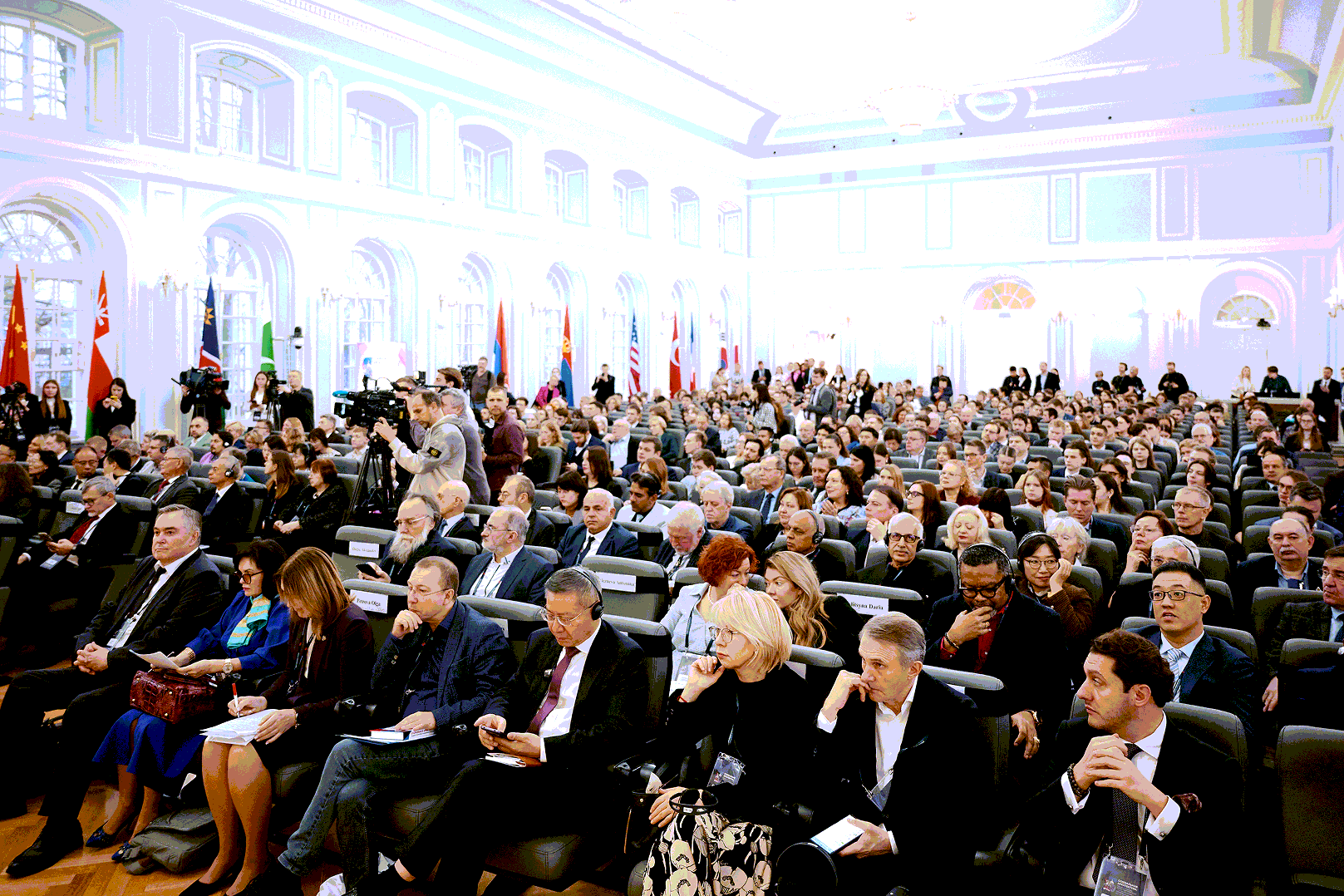
Registration has officially opened for the 2nd International Scientific and Practical Conference "Social Architecture: Theory and Practice of Social Change", which will take place on 23–24 October in St. Petersburg. The event will bring together leading Russian and international researchers from the social sciences and humanities, alongside experts and representatives of political institutions and think tanks.
The programme of this research conference is built around the concept of agency – the capacity of individuals, society, and institutions to shape a vision of a desired future, define long-term goals, and find ways to achieve them.
The experts will focus on six key areas:
• "The Future in the Present: The Uneven Distribution of Change Across Nations and Societies"
• "The Engineered Future: Human Agency vs. Technology"
• "Society as an Agent in Co-Designing the Future"
• "The Role of the State and Institutional Actors in Shaping the Future"
• "Scenario Crossroads: Which Futures Are Emerging Today?"
• "Social Architecture: Translating Future Scenarios into Present Action"
Thematic discussions will focus on technological, social, demographic, cultural, and governance shifts, their impact on individuals and society, the role of the state and institutions, and potential development scenarios.
The event will culminate with the plenary session, "The Future as a Project: Challenges and the Emerging Research Agenda for Social Architecture".
The conference is co-organized by the Expert Institute for Social Research, the Institute of Social Architecture (a part of the Presidential Platform "Russia – the Country of Opportunities"), and St. Petersburg State University.
The event will take place at "Russia – My History" Museum and Exhibition Centre. The inaugural conference was held in December 2025 and convened more than 600 leading researchers, policymakers, and representatives from think tanks and development institutions across 28 countries.
For registration, please visit the official event website. Applications to attend the event must be submitted by 20 October. Speaker registration closes on 15 October.
Media accreditation contact: Tatyana Lupanova, +7 (915) 008 7800, press@socarch.ru
On 5–6 December, St. Petersburg State University hosts the inaugural International Scientific and Practical Conference, "Social Architecture: Theory and Practice of Social Change".
The conference brings together 600 participants – researchers from the social sciences and humanities, experts, and representatives from political institutions and think tanks. Among the participants are renowned Russian and international scholars from 27 countries, including China, Brazil, the US, Iran, France, Italy, Spain, South Korea, Vietnam, and Pakistan.
Russian President Vladimir Putin sent a welcoming message to the conference participants, organizers, and guests. In his address, he noted that Russia has already built up substantial experience in implementing social architecture projects and stands ready to share its expertise with international partners.
Alexander Kharichev, Head of the Presidential Directorate for Monitoring and Analysis of Social Processes, emphasized that a systemic approach to managing social development is absolutely essential in the face of today's complex challenges.
"We live in an era of profound, rapid change that affects every aspect of life – from geopolitics and the economy to technology and everyday communication," Alexander Kharichev stated. "These shifts create new hurdles, such as labour market transformations and changing life and career paths, which existing social institutions often fail to adapt to at the pace of change. Now more than ever, we need new societal development models that can respond to the demands of our time. Our work centres on the concept of 'social architecture' – the intentional design and execution of meaningful societal change. Two factors drive this focus. First, it is an objective necessity dictated by life itself. Second, over the past decade, Russia has built up substantial experience in successfully delivering diverse social initiatives that naturally meet the needs of both people and the state, creating a solid foundation for systematic work moving forward."
St. Petersburg Governor Alexander Beglov highlighted how deeply rooted the concept of social design is in the city's rich history.
"It is highly symbolic that such a major conference on social architecture is taking place here," Alexander Beglov noted. "From its inception, St. Petersburg has been at the centre of grand social transformations. Peter the Great reshaped the old Rus' to create a new Russia. His vision went far beyond building houses, a navy, a new economy, and a governance system – he fundamentally reshaped the very mindset of the people. The epicentre of those transformations was right here in St. Petersburg. In the last century, our city once again became a hub for profound social change."
Olga Petrova, Deputy Minister of Science and Higher Education of the Russian Federation, emphasized that standardizing theoretical frameworks and creating practical solutions for social architecture projects is critical to driving the nation's progress.
"Russian universities are actively engaged in social architecture initiatives dedicated to reinforcing traditional Russian spiritual and moral values," Olga Petrova said. "Equipped with all the necessary resources and capabilities, our universities bring together civil society, government institutions, and the business community. This enables effective collaboration, the delivery of socially significant projects, and the resolution of complex, multi-level challenges."
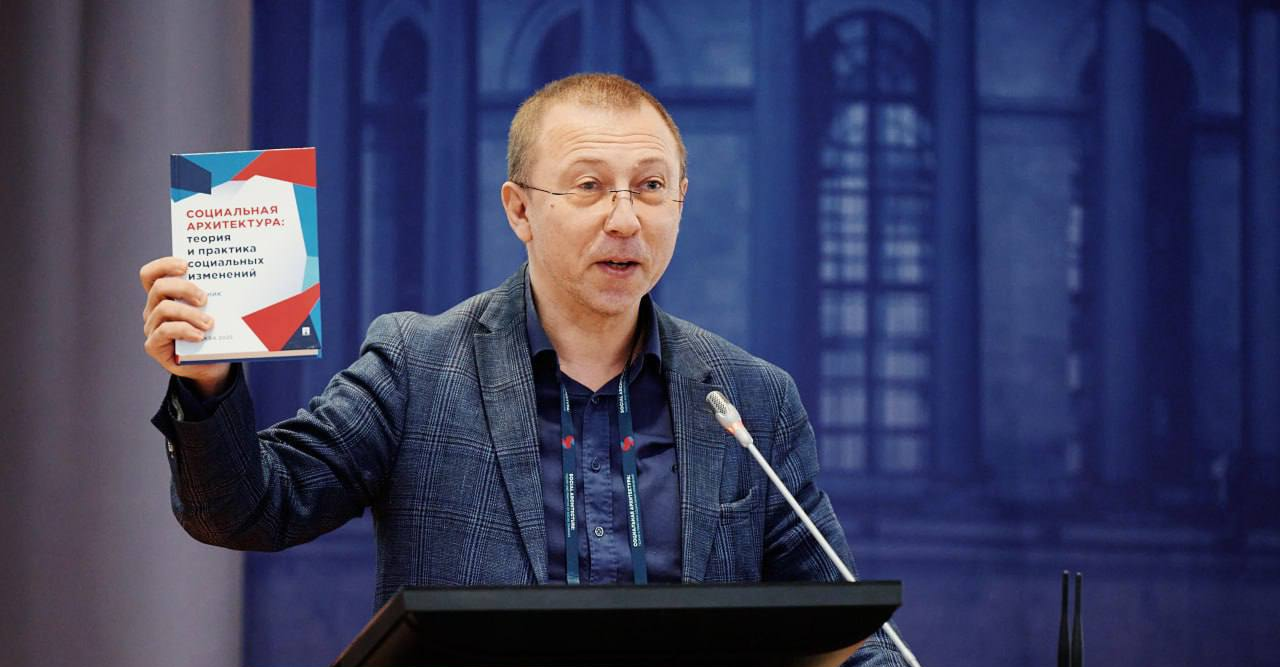
The conference featured the presentation of the world's first textbook on social architecture. The authors include leading scholars and experts in the social sciences and humanities, such as Sergey Volodenkov, Professor in the Faculty of Political Science at Lomonosov Moscow State University (MSU); Alexander Kharichev, Head of the Presidential Directorate for Monitoring and Analysis of Social Processes; and Antonina Selezneva, Professor in the MSU Faculty of Political Science and Head of the Department for Educational Activities in Social Sciences and Humanities at the Expert Institute for Social Research (EISR).
"More than just a textbook, this is Russia's very first systematic guide to a brand-new field of study and professional practice," Sergey Volodenkov stated. "The core idea here is simple but vital: tomorrow's society isn't just handed to us – it is designed and built. It is our response to today's complex challenges, ensuring that spontaneous social changes are replaced by the intentional, well-rounded construction of our social reality."
During the presentation, Sergey Volodenkov noted that the textbook serves as a foundational blueprint, systematically outlining the concepts, goals, methodology, and tools of social architecture. He explained that this interdisciplinary field directly answers the needs of modern society, offering a scientifically grounded framework to train a new generation of professionals ready to shape Russia's future in line with its national priorities.
This pioneering work by Russian researchers offers a comprehensive framework for social architecture, seamlessly blending cutting-edge domestic insights with global best practices.
Highlighting the Chinese model of social architecture, Zhang Weiwei, a prominent Chinese political scientist, journalist, and Director of the China Institute at Fudan University, explained that China's success lies in its ability to marry a planned economy with market mechanisms – a system that can respond rapidly to social challenges while maintaining social harmony.
"Central to this is a deep-rooted cultural unity and a spiritual foundation built on Confucian, Taoist, and Buddhist traditions," Zhang Weiwei added. "China's steady growth rests on a unique social architecture that has been built over centuries. Today, this manifests as a balanced system where the state, society, and capital operate in harmony."
"For the past 20–25 years, a unipolar global order has driven widespread ideological, economic, and political Westernization," noted Dušan Proroković, Head of the Centre for Eurasian Studies at the Institute of International Politics and Economics in Belgrade. "Today, the conversation has shifted to a multipolar world and alternatives. I believe the outcome of our conference today will be a clear vision of how to de-Westernize political processes in non-Western regions of the world."
The demand for training this new generation of specialists has already gained strong backing from leading Russian universities. Since 1 September 2025, specialized educational programmes in social architecture are underway at Lomonosov Moscow State University (MSU), the Financial University under the Government of the Russian Federation, and the Russian State University for the Humanities (RSUH). St. Petersburg State University is scheduled to launch its own programme in 2026.
"St. Petersburg State University is currently developing a 'Social Architecture' Master's programme to train forward-thinking specialists," noted Marina Lavrikova, Vice-Rector of the University. "Our graduates will be equipped to comprehensively analyze, model, and forecast social processes, while simultaneously designing and executing socially significant initiatives that shape societal values and solve concrete public issues."
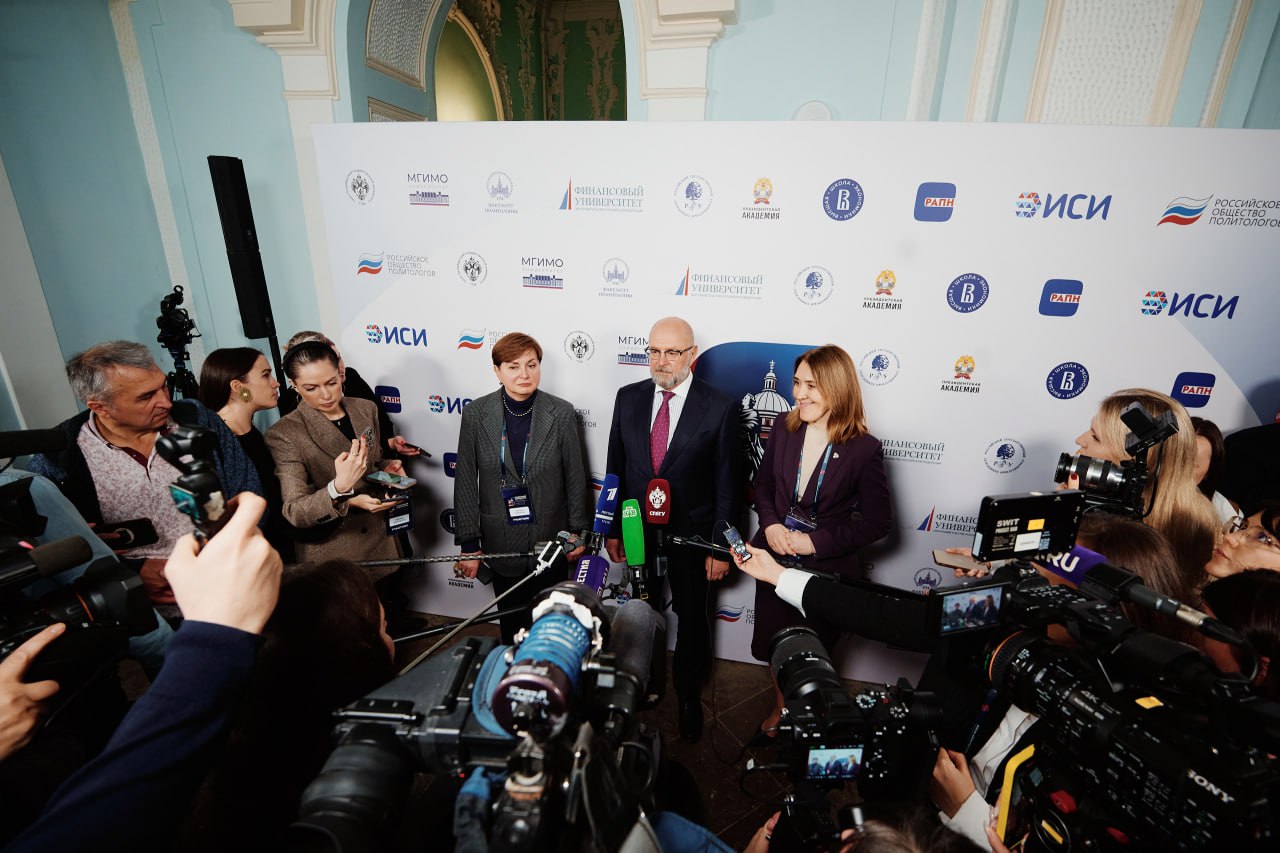
The inaugural International Scientific and Practical Conference, "Social Architecture: Theory and Practice of Social Change", took place in St. Petersburg. The event brought together 600 experts from 27 countries, including China, India, Belarus, Kazakhstan, Brazil, Serbia, Iran, the US, France, Italy, South Korea, and Japan, alongside some other European states and nations from across Africa and the Middle East.
Discussions centred on the evolution of social architecture as an emerging academic and professional discipline – a field rapidly gaining ground in Russia and sparking widespread global interest.
Russian President Vladimir Putin sent a welcoming message to the attendees, noting that social architecture is a highly relevant field with great potential, and emphasizing its particular importance within state and local governance.
Alexander Kharichev, Head of the Presidential Directorate for Monitoring and Analysis of Social Processes, remarked that social architecture should serve as a tool for shaping the future.
"In a rapidly changing world, it is absolutely essential that we find common ground for cooperation among all civilizations," Alexander Kharichev stated. "Our people will never stop dreaming. Our job isn't to invent a dream for them, but to truly listen and give that dream structural form – through words, blueprints, and concepts. That is the true calling of a social architect."
One of the conference's highlights was the unveiling of the world's first textbook on social architecture, authored by a collaborative team of Russian political scientists, scholars, and practitioners. According to Sergey Volodenkov, a professor in the Faculty of Political Science at Lomonosov Moscow State University (MSU) and a co-author of the book, the textbook lays the groundwork for training a new generation of specialists equipped to shape Russia's future social development and tackle today's complex challenges.
"Social design is emerging as a new form of political thinking, where it is not just the ultimate goals that matter, but the very methods we use to build consensus and solidarity within society," Sergey Volodenkov noted.
Antonina Selezneva, an MSU professor of political science, Head of the Department of Educational Activities in Social Sciences and Humanities at the Expert Institute for Social Research (EISR), and a co-author of the textbook, linked the conference to setting the conceptual and methodological boundaries for this new profession.
"The rise of any new professional field demands rigorous academic analysis and justification. In that sense, hosting this conference is an essential, foundational step in cementing its conceptual and methodological framework," Antonina Selezneva remarked. "This event is completely unprecedented and fundamentally important for our country. It carries immense weight internationally as well, because our President – and we, following his lead – are positioning social architecture as a brand-new avenue for meaningful engagement between the state and society."
Oksana Gaman-Golutvina, President of the Russian Political Science Association, Head of the Department of Comparative Politics at MGIMO University, and Academic Supervisor of the MGIMO Centre for Social Architecture, noted that the conference served as a unique platform for discussing ways to weather the 'perfect storm' of contemporary crises.
"It is highly significant that the conference brought together roughly 600 participants from 27 countries, representing such diverse regions as Europe, North and Latin America, Asia, and Africa," Oksana Gaman-Golutvina emphasized. "The real value of this kind of representative dialogue is that it allows us to pool firsthand experiences emerging from completely different socio-economic and socio-political landscapes."
Zhang Weiwei, a prominent Chinese political scientist, journalist, and Director of the China Institute at Fudan University, highlighted the vital role of social modelling as a foundation for societal transformation. Reflecting on China's achievements over recent decades, he particularly emphasized the need to build various future scenarios and monitor emerging trends to guarantee sustainable social development.
"In today's world, living without planning is simply not an option," Zhang Weiwei noted. "We have a responsibility to plan for the future. Even though tomorrow is not predetermined, we must anticipate the dangers and challenges that lie ahead."
American economist Jeffrey D. Sachs noted that regional integration is a primary objective of social architecture.
"The importance of regions – not within individual nations, but spanning across borders – is growing, as many transformations require transnational cooperation to safeguard ecosystems. Consequently, regional integration is more critical today than ever before," Jeffrey D. Sachs stated.
Conference participants also discussed training specialists for this expanding profession. Plans are underway to launch a Master's programme in social architecture at St. Petersburg State University starting in 2026. Meanwhile, graduate-level training for future social architects is already being conducted at Lomonosov Moscow State University (MSU) and the Financial University under the Government of the Russian Federation as of 1 September 2025. Continuing education courses are also being offered at RANEPA and the Russian State University for the Humanities (RSUH).
"While this powerful joint state and public initiative in social architecture was only recently launched, it follows a long period of intensive preparation," noted Andrey Shutov, President of the Russian Society of Political Scientists and Dean of the Faculty of Political Science at Lomonosov Moscow State University. "We have undertaken significant intellectual groundwork and developed comprehensive methodological materials in order to establish a rigorous research agenda and get the educational process fully off the ground."
Leading experts delivered presentations on critical challenges in social development, including Russian philosopher and thinker Alexander Dugin; Pskov Region Governor Mikhail Vedernikov; St. Petersburg Vice-Governor Boris Piotrovsky; former Austrian Foreign Minister Karin Kneissl; Valery Fedorov, Director General of the Russian Public Opinion Research Center (VCIOM); Andrei Polosin, Vice-Rector of the Russian Presidential Academy of National Economy and Public Administration (RANEPA); Vardan Bagdasaryan, Dean of the Faculty of History, Political Science, and Law at the State University of Education; Vladimir Nechaev, Rector of Sevastopol State University; Igor Zadorin, Head of the ZIRCON Research Group; Andrei Betin, General Director of the Presidential Platform "Russia – Land of Opportunity"; Franklin Nyamsi, President of the African Freedom Institute; Sok Khorn, Rector of the National University of Battambang; Ali Asghar Soltanieh, Director of the Vienna International Institute for Middle East Studies; Javier Hurtado Mira, Chairman at Democrat Youth Community of Europe; and many others.
Speakers noted that a significant milestone in institutionalizing this emerging field would be the creation of an Institute of Social Architecture within the Presidential Platform "Russia – Land of Opportunity" – a strategic initiative previously announced by Alexander Kharichev.
The conference also served as a platform to announce plans to transform it into a recurring forum for international dialogue on social architecture, uniting researchers, practitioners, policymakers, and civil society representatives from around the globe.
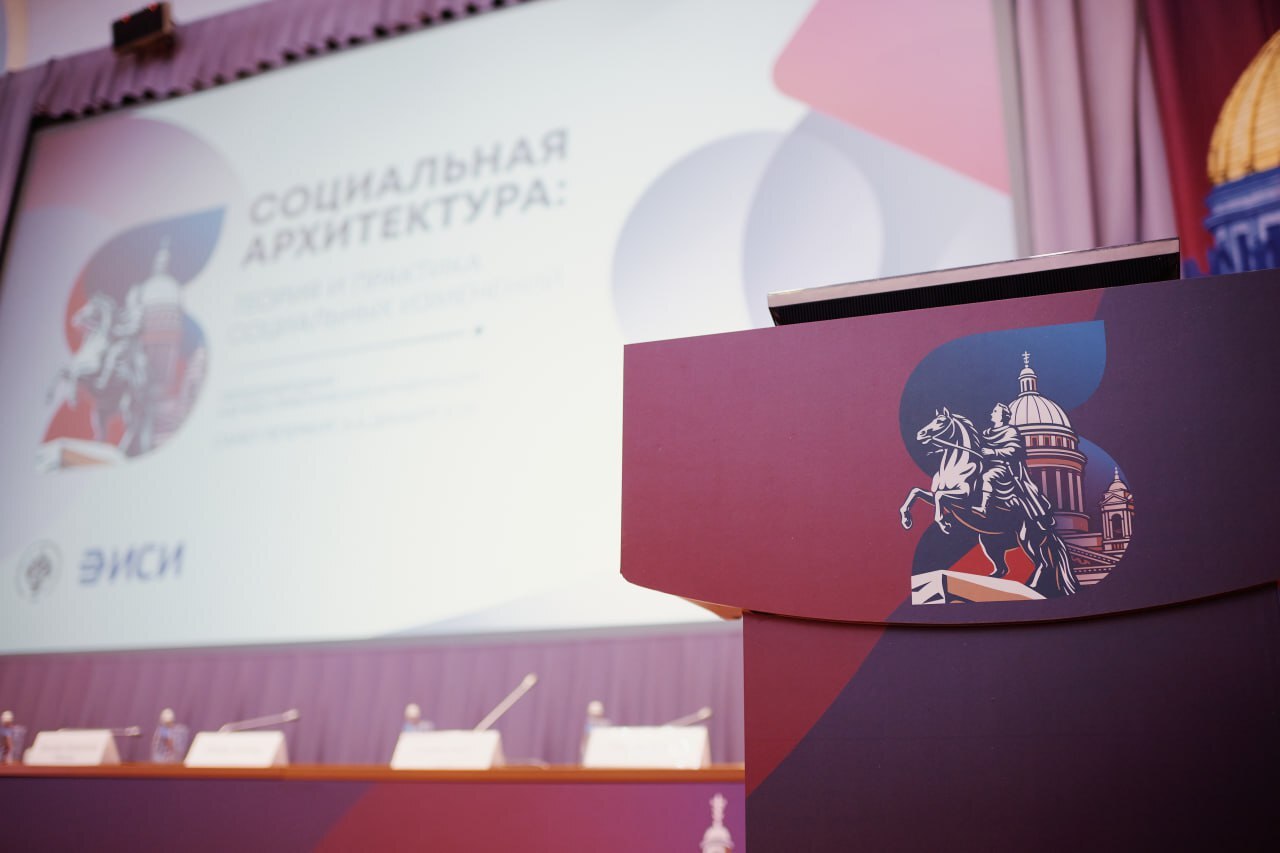
Following the International Scientific and Practical Conference, "Social Architecture: Theory and Practice of Social Change", held in St. Petersburg on 5–6 December, the participating experts adopted a resolution outlining the core development trajectories for this emerging academic and professional field.
Key provisions of the resolution:
• Social architecture should rest on a philosophical, value, and spiritual foundation that reflects a society's distinct identity.
• Navigating an era of global change requires innovative practices that take into account the interests of individuals, society, and the state while fostering an environment of trust.
• Social architecture disciplines should be integrated into training frameworks for public administrators, political consultants, and public communication specialists.
• Expanding international collaboration and sharing best practices is vital to deepening humanitarian connections and co-creating a compelling vision for the future.
• Merging modern technology with social modelling will allow leadership to accurately analyze societal processes and forecast the real-world impact of administrative decisions.
• Social architecture is emerging as a primary driver of humanitarian and social development, not only in Russia but across the globe. Ensuring the stability of social architecture projects requires a dedicated regulatory framework.
The insights gained from the conference will be integrated into practical public administration, ensuring that systematic work to develop social architecture continues.
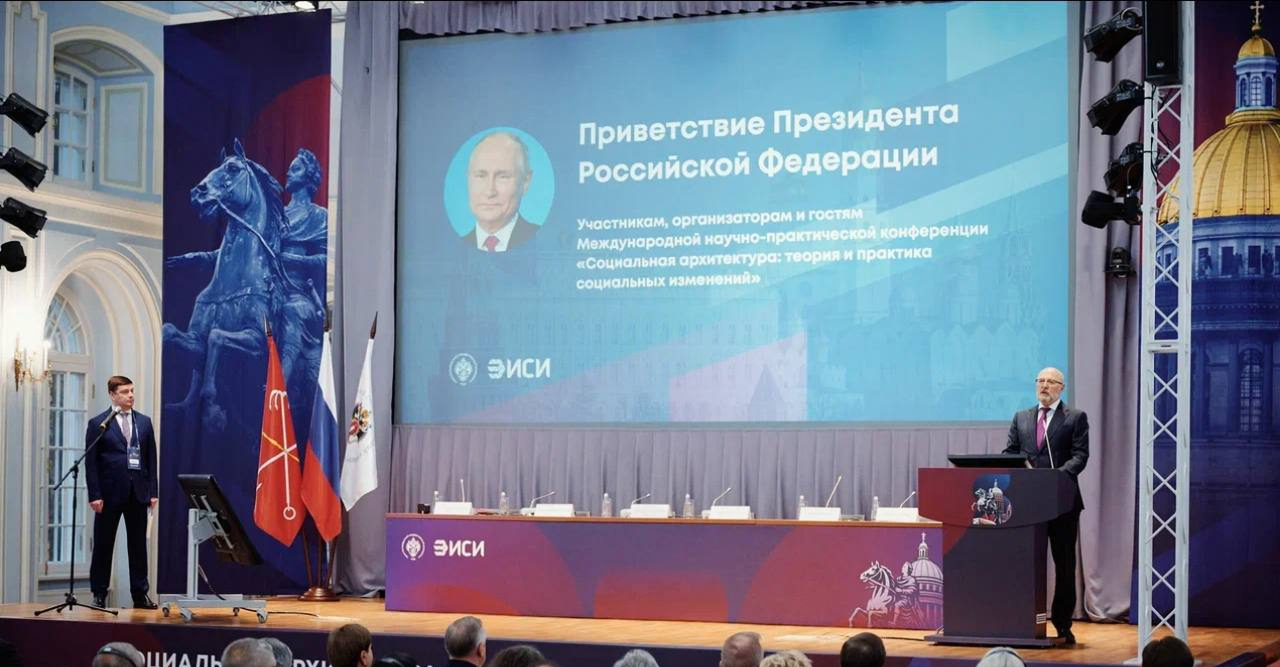
President of the Russian Federation Vladimir Putin sent a welcoming message to the participants, organizers, and guests of the International Scientific and Practical Conference “Social Architecture: Theory and Practice of Social Change”, which takes place on 5–6 December at St. Petersburg State University (SPbU).
Alexander Kharichev, Head of the Presidential Directorate for Monitoring and Analysis of Social Processes, read out the address during the opening ceremony.
"This forum has brought together politicians, scholars, experts, and think-tank representatives from Russia and around the world to discuss a wide range of issues surrounding the emergence and development of social architecture – a field that is both in high demand and full of promise – as well as its role within state and local governance," President Putin noted in his address.
He emphasized that the plenary sessions, panel discussions, as well as open debates, would allow participants to study examples of successful solutions to complex socially significant issues and of designing changes that make life better.
"I would like to highlight that our country has already built up substantial experience in implementing social architecture projects. These initiatives help unlock the potential of our regions, cities, and towns, allowing us to respond quickly to people's needs and introduce effective feedback mechanisms. Furthermore, they create a strong foundation for civic initiatives and foster productive collaboration between the state and society. We are fully ready to share this expertise with our international partners," the President added.
The Head of State also expressed confidence that this inaugural international conference on social architecture would become a regular event, helping to foster a broad international dialogue in the field.
The conference "Social Architecture: Theory and Practice of Social Change" brings together 600 participants – researchers from the social sciences and humanities, experts, and representatives from political institutions and think tanks. Among them are renowned Russian and international scholars from 27 countries, including China, Brazil, the US, Iran, France, Italy, Spain, South Korea, Vietnam, and Pakistan.
The event will address key issues within social architecture – an innovative academic and professional field that has been actively developing in Russia in recent years. A central focus of the discussions will be modelling the future development of society, defining the role of values, and examining how different civilizations and cultures interact in today's multipolar world.
The conference will take place at a modern venue designed to provide a comfortable environment for participants and foster productive dialogue
“Russia – My History” Museum and Exhibition Centre
32 Basseinaya Street, St. Petersburg
General Inquiries
info@socarch.ruConference Press Office
press@socarch.ruParticipant Support
participants@socarch.ruHOW TO GET HERE:
If you are coming by public transit:
If you are coming by public transit, the nearest metro stations are Elektrosila and Moskovskaya.
If you are driving:
You can navigate to the conference venue using the GPS coordinates 59.865600, 30.339574.
Free parking is available on-site.